Solar Generators for RV and Camping: What's Actually Worth Packing
A 2,200-watt home backup unit is overkill in a tent and underkill in a Class A. Here's how to think about portable power for the trip you actually take.
Start with the trip, not the spec sheet
The biggest mistake we see is buying for the maximalist version of a hobby people haven't actually started yet. A weekend tent camper doesn't need 2,240 Wh and 57 pounds of battery any more than they need a satellite phone. Match the unit to the trip you actually take, not the one you imagine.
Weekend tent camping: light and small wins
Realistic device list: phone charging × 2, a portable speaker, a string of LED camp lights, maybe a CPAP at night. Total daily draw is comfortably under 200 Wh.
At that load, a 300–500 Wh unit — something in the 4Patriots Sidekick class — is the right tool. Light enough to actually carry from the car to the campsite, capacity enough to cover two nights without recharging, and pairs cleanly with a single 100 W folding panel for indefinite use.
Truck-bed / overlanding weekends: the middle ground
Now you're running a 12V cooler (40–60 W cycling), a CPAP, multiple devices, and probably an inverter-powered laptop in the evenings. Daily draw climbs to 500–800 Wh.
A 1,000–1,500 Wh unit is the sweet spot. The AlphaCase Elite sits in this range, with the added bonus of a hard-shell case that survives being thrown in a truck bed. Pair it with a 200 W panel for daily recharge under typical conditions.
RV and extended boondocking: now we're back at the 2200X
A Class B or Class C boondocking for a week — fridge, water pump, lights, fans, multiple device charging, occasional inverter use — easily runs 1,500–2,500 Wh per day. This is where the Patriot Power 2200X earns its weight (and you can leave it in the RV, so the 57 lbs doesn't matter the way it would for a backpack).
Two notes for RV use specifically:
- UPS pass-through matters for the RV fridge. Brief power dips when switching between shore power and battery can cycle a 12V absorption fridge into fault mode.
- Add panels rather than batteries. A single base unit with three 200 W panels positioned well will outperform a stacked battery setup with one panel, because the constraint at length is recharge rate, not capacity.
Panel placement: the part most guides skip
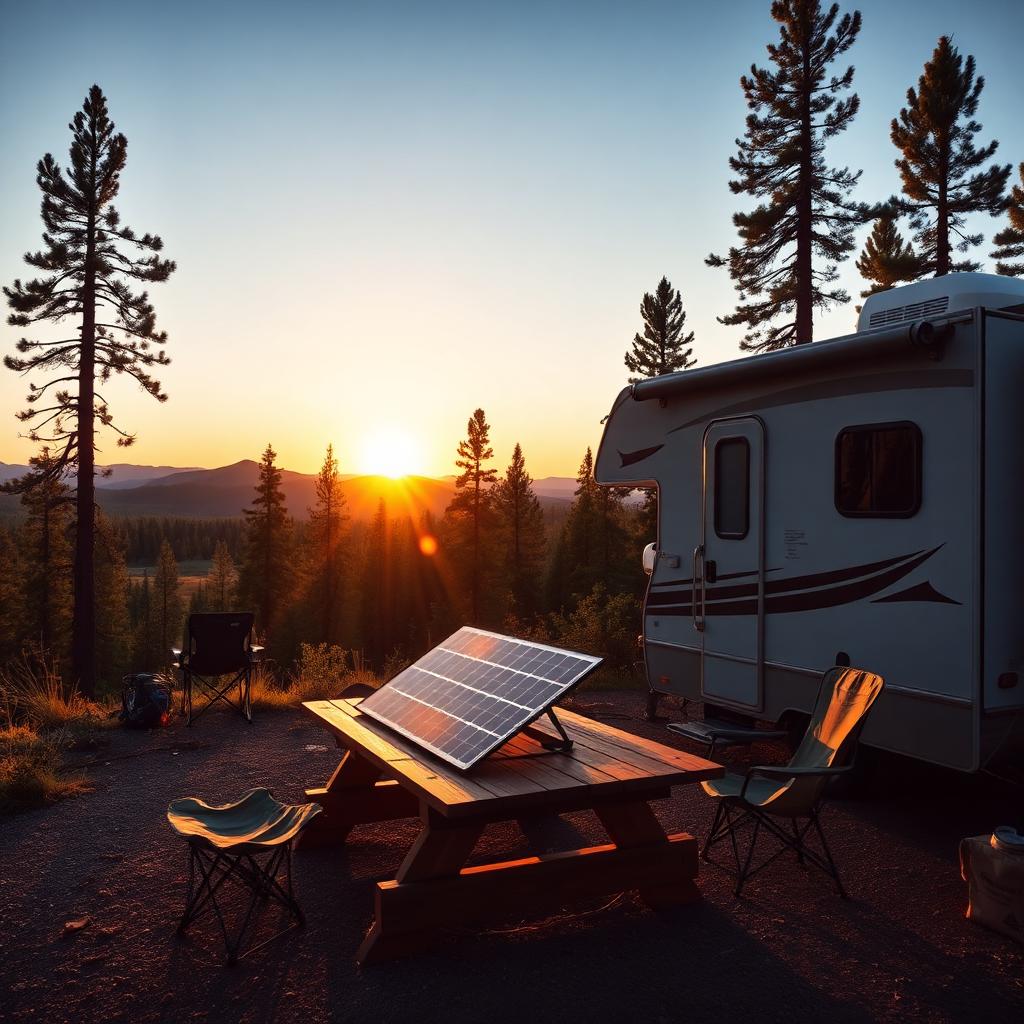
Pointed at the sun beats every other optimization. A 100 W panel tilted correctly at noon outproduces a 200 W panel lying flat on a picnic table. If you're going to invest in anything beyond the base bundle, invest in a folding panel with a real adjustable kickstand and a 25-foot extension cable so the panel can move with the sun while the unit stays in the shade. (Heat hurts battery life almost as much as cold does.)
The "what would I actually buy" answer
- Tent camper, occasional weekends: Sidekick-class 300–500 Wh + one 100 W panel.
- Overlander / truck camper: AlphaCase Elite-class 1,000–1,500 Wh + one 200 W panel.
- RV / extended boondocker: 2200X + two-to-three 200 W panels.
And if you'd rather one unit do double duty as both home backup and trip power, the 2200X is the only one of the three that really pulls that off — which is part of why our full review of it is the anchor of this site.